2024 Retrospective: Being Abbey Road

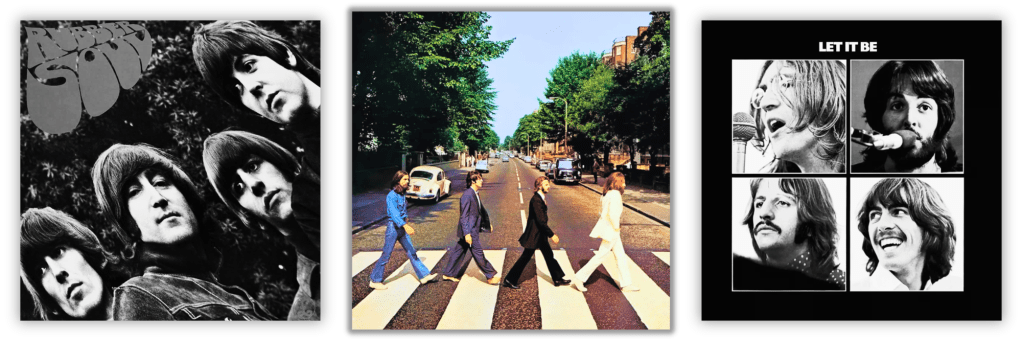
For a long time when I was younger, Rubber Soul was my favourite Beatles album. Recorded when they were in their mid-20s, it has an easy, natural optimism that I found very attractive. The Beatles were young, talented, good at what they did, and just starting to discover themselves as artists and people. There was a lot for them to be optimistic about, and it came across on record. It was an easy album to like.

In 2023, as an older man, weathered and scarred, I rediscovered Abbey Road and decided to change my mind. It was my favourite listen of that year, and I think my new favourite Beatles album, for much the same reasons that Rubber Soul is so great even though in many ways they are complete opposites of each other.

In contrast to Rubber Soul’s easy and natural optimism, the positivity in Abbey Road was a deliberate and hard fought choice. Leading up to its creation were the disastrous Let it Be sessions, and when they fell apart the vibes between the members were mostly very bad. But not all the way bad all the time. Only three weeks later the group decided to get back together again, to give it another go.

Paul McCartney said: “it was like we should put down the boxing gloves and try and just get it together and really make a very special album.” And producer George Martin said “Nobody knew for sure that it was going to be the last album – but everybody felt it was.”

The Beatles at this point were always on the verge of breaking up; they had grown into different people, and they had just been through too much. But they were clear-eyed on what the situation was, and going into Abbey Road they decided to choose joy anyways. Focusing in on what was important, the music that only they could make together, the resulting album was mature, complex, and radiated optimism. It was arguably the best of their career. Choosing positivity regardless of your challenges and just focusing on what’s really important seems to have yielded them excellent results in the face of adversity. Don’t get me wrong, Rubber Soul is still a great album, it’s just that natural optimism during the good times is less interesting than deliberate positivity during the tougher ones.

Rediscovering this album now was timely, because on many fronts 2024 was randomly not great.

The night before my daughter’s birthday, our basement flooded from the rain. Most of the floor and drywall had to be removed, we had to do waterproofing and install a sump pump. We had to find the sources of water and close them up. Some of that water came from a poorly positioned old shed, so we had to get that disposed of and get a new one. Huge cracks appeared in our driveway from the rain, so that had to get repaved. Then our dishwasher broke. And our washer and dryer were on their way out so why not replace those too. 

Now that we were warmed up, things could really start to go wrong. We had an active leak from our master bathroom dripping onto an old plaster ceiling, and because the moisture was behind the bathroom tile we had to demolish the master bath and build a new one. And because old plaster has asbestos, to remove it properly you have to seal off the impacted areas and move out of the house. And once you’re doing that you’re going to do a few other things too.

While my wife was in her last trimester of pregnancy, we packed up and moved to my parents house and ended up managing over 20 contractor jobs or major deliveries just to make the house work properly again.

Somewhere in between I sprained my ankle for absolutely no reason, got COVID, got into a minor car accident with less-than-minor damages, and I found that my credit score had accidentally been merged with somebody else with a slightly similar name, which I then had to get unwound. There is no reason why Ian Lee needs that many credit cards. Also, Trump.

With chunks of my house, car, health and possibly my credit rating were in some comical state of constant disrepair, none of it ever really got to me. It kept me busy, annoyed and somewhat poorer than when I started, but I was never actually upset. Because I knew that what was important in my life was the health and love of my family. My wife and daughter are both the sources and recipients of all the positivity and optimism and joy in my life. Everything else is just stuff.

My daughter is now 4, and was born very prematurely during the pandemic, and spent her first three months of life in the hospital. Tiny and red in her incubator, the beeping machines helped her undeveloped lungs breathe and monitored her heart, which we hoped would not require a surgery. That got to me, as it should. Because these are the real problems, the ones that rightfully keep you up at night, the ones that really threaten the things that matter. Today, she is an energetic, caring, sharp and articulate junior kindergartener, and amazes me on a daily basis. One positive side effect of the traumatic start to her life is the gratitude we feel for her simply just being. It will probably last us the rest of our lives. 

My wife continues to amaze me. When we first started dating we both had a feeling it’d be about that good forever, and 10 years in that seems to be coming to pass. We share the same values, want broadly the same things, and we make a strong and complementary team. She is hilarious in ways that are rare and original, and still surprises me to this day. I couldn’t have asked for a better partner in life, and I still stare at her face sometimes in admiration when I don’t think she’s looking, but she is probably looking because she sees everything somehow.

And to our new son, just born a few weeks ago. Of all the things that happened to us this year, your safe passage into the world was the one sole thing we were all hoping and praying for, especially given what happened with your big sister. Through the floods of the summer and the unplanned major renovations of the fall and winter, as long as you were growing bigger and stronger in your mother’s belly everything was going to be fine. Every other part of our lives could happily fall apart as long as you stayed whole, and I’d have gladly accepted all the house issues, car accidents and other misfortunes of day-to-day life if it meant that you were going to be okay.

He arrived a full term baby, exactly on time and as planned – a chonky 8lb 14oz, four times the birth weight of his sister. When I stare into my son’s eyes and he stares back into mine, it’s like looking through an infinity mirror into our shared past and future. I can see him through his eyes, but I also see my father reflected back at me, and his father before him who I never had the chance to meet, and then myself again, back and forth from the beginning to the end and back. It is 3am and he also needs a burp and a diaper change. I am tired and grateful.

Maybe one day I will introduce him to The Beatles or he may discover them himself, and assuming listening to albums or The Beatles will still be a thing in 2045, I’ll watch him to see which of their records he gravitates towards. Maybe it’ll be Rubber Soul like me, or maybe it’ll be Sgt Pepper like the rest of the world. Either way I’ll smile, knowing that Abbey Road is waiting for him whenever he’s ready to hear it.


Did you like what you read? Join my mailing list for other updates and to never miss a post:
Processing…
Success! You're on the list.

Rosé’s APT uses almost every chord in the scale

it’s probably in C minor and has every chord there except D minor, and other music theory facts that you probably don’t care about.

APT has a surprising amount of harmonic complexity for what is more or less a straight pop song. Which is fancy talk for saying it has unusual or interesting chord choices. This is going to get right into music theory land with no training wheels, and maybe some more specific production details, so If I haven’t lost you yet, I definitely will now! Here we go!

There are strong signals that this song is in Cm. The “uh huh uh huh” of the main cheerleader girl chant chorus are Bb to C, ie VII to I. The verse is the same, and the bridge is C, Bb, Eb, C (so I, VII, III, I), which also feels strongly locked to Cm, although that sequence itself is a little unique.

The pretty and melodic pre-chorus however is Ab, Bb, C, to Eb, and it’s still not clear to me if it’s in Cm or if it changes key to Eb. In Cm it’s consistent with the rest of the song but the relative chord combinations get awfully strange, because what the heck is VI, VII, I, III? Comparatively in Eb it presents as a much more normative IV, V, VI, I, but then why change keys just in the pre-chorus? 

Weird! 

But maybe ambiguity is the point. A good pop music strategy is to milk the tension before the catharsis, whether this is EDM drops or soft verses exploding into loud choruses or modern pop melodies that tease a resolution to the root that may or may not happen.

Given the key of the rest of the song, I think Cm makes the most sense. The idea of VI escalating stepwise upwards to I but then ending on III (which is kind of a flakier version of I anyways) and then cycling back to VI and going on forever kind of tracks – like the way most pop songs melodies today, forever sitting on II and never resolving to I or III, are in constant state of deliciously, tense limbo.

Moving to the bridge, we still have some interesting things to discuss.  The build-up guitar-style chug into the bridge is on G, which as the V of C makes complete sense, but is notable as the first we’re hearing the chord in the song. It resolves to the I, VII, III, I of the bridge, (C, Bb, Eb, C), which as noted is already an unusual combination, that then ends with a repeated hammering on F.  

F!  Where did F come from? 

Although as the IV of C it is harmonically quite unremarkable, but for it to show up now, for the first time, with the song being almost over, in such a forceful and climatically manner it kind of blew me away. 

The song has now featured every chord from I to VIII except for II. No supertonic for you. Take that, The Weeknd.

And just as this feels like a peak, it steps upwards even higher from IV to V to VI, running right through a pseudo-deceptive-cadence into the prechorus, which in itself is escalating stepwise upwards from VI to VIII. The song’s constant continuous escalation going into its climax is underpinned by these harmonic choices, chord structures, and application of music theory.

All in the service of good pop music. Pop music! Not classical, prog, experimental, indie or dance, but pure pop – the simplest, catchiest, and most digestible form of music, made with the explicit purpose to be understood and enjoyed by as many people as possible. For a pure pop song to have any complexity or nuance, whether in construction or music theory or cultural context, is to me that much more meaningful, as all the complexity must be refined to the point where it still appears simple on the surface. 

And that’s it. After spewing out over 3000 words into the ether I have finally run out of things to say about this 3-minute K-Pop trifle. But to the song’s credit, over the month-long rollout of these essays my initial blast of enthusiasm has waned only slightly.


If you’ve made it here to the end, thank you for sticking around. And if you like what you read, join my mailing list and never miss an update:

Processing…
Success! You're on the list.

Whose Song Is It Anyways (feat. Bruno Mars, Rosé & Lady Gaga)

Dammit Bruno, stop helping people, it’s confusing.

“ROSÉ & Bruno Mars – APT”

Though the international smash hit APT feels like it has been released as a Rosé solo track, if you look more closely it gets more complicated. 

On YouTube and streaming services, the song is labeled as “Rosé & Bruno Mars – APT.  Though Rosé is listed first, Bruno is positioned as an almost equal partner. It is not “Rosé – APT (feat. Bruno Mars)”, like in solo songs where another artist just kind of shows up for a verse. 

In the song’s artwork, ROSÉ is shown in big bold font, with Bruno Mars in a smaller font. Their names are separated by a stylized lightning bolt. If they wanted to put an ampersand, they would have put an ampersand. All this keeps their collaborative partnership even more vague.

It is definitely led by Rosé. But by how much?

Rosé has talked about how she came up with the “APT” hook, based on the Korean drinking game. That hook is definitely hers, and is distinctly Korean. But I suspect the rest of the song was heavily influenced by Bruno Mars. Something about the way he sings the pre-chorus feels like it was made for and by him, he has some history with a rock aesthetic, and some of the more atypical chord progressions do map to things he’s done in the past. Rosé has none of this stylistic breadth or complexity in her comparatively short history, nor in the songs she’s released since.

Obviously I have no proof of any of this and the full list of songwriting credits is quite long, so it’s hard to know who did what. But if, for the sake of the exercise, we just assume that I’m right, one could argue this is as much or more of a Bruno Mars song than it is a Rosé song. She doesn’t even sing lead on the pre-choruses once they start harmonizing.

So why does it still feel like it’s hers? 

Though the marketing of the song simply as being Rosé-first definitely helps, there is something else happening here in how the song itself is presented.

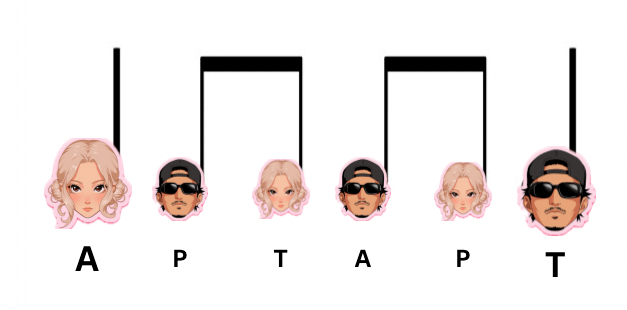
And that is, quite simply, that Rosé goes first. 

The first thing you hear is the chorus, which she sings. Then she does the verse and pre-chorus. She does them first.

The first time you experience each section of the song, it is her voice you are hearing, so subconsciously each section of the song is then anchored with her. 

By the time Bruno Mars appears, even though some of the connections with him may be deeper and firmer it’s really hard to shake the ideas of ownership we already have.  

Showing up first counts for a lot.

Imagine if it didn’t open with the chorus. What if Bruno’s verse and pre-chorus came first, even if Rosé kept the chorus and the bridge.  Would it still feel like her song? Or is she now a feature on a Bruno track, with a slightly Korean flavour?  

If only there was another comparable Bruno Mars collaboration that almost does this exact opposite thing. 

“Lady Gaga, Bruno Mars – Die with a Smile”

Just two months before APT dropped, “Die with a Smile” was released, a Bruno Mars collaboration with Lady Gaga. On YouTube and Streaming Services, the artist is labeled as either “Lady Gaga, Bruno Mars” or “Lady Gaga & Bruno Mars”. The music video is on Lady Gaga’s YouTube page, while Bruno hosts a live performance with 5% of the views. Clicking the Artist link on a music streaming services takes you to Lady Gaga’s page, not Bruno’s. 

The artwork on the single shows the two artists standing together, artfully, roughly right next to each other with equal positioning – except that Lady Gaga on the left has her arm and shoulder ever so slightly ahead of Bruno Mars. 

All of this positioning points again to a mostly equal partnership, with the artist that is not Bruno Mars being slightly in front.

When I actually listen to the song though, I completely forget that Lady Gaga is even in there at all. It’s always a surprise when she starts to sing, and when the song ends I’ve forgotten she exists again. To me, this is a loosie Bruno Mars single, steeped in his songwriting and melodic style even from the opening strumming pattern. When they say this was written collaboratively based on an initial idea from Mars, it feels to me like that initial idea was pretty well formed from the jump. Lady Gaga has almost zero presence.

Though this is all once again purely subjective (and depending on your Lady Gaga fandom a potentially unforgivable sin), I do have the one supporting fact in my favor: that Bruno Mars goes first. He basically gets the entire first minute and twenty-five seconds to himself.  The first time you hear each section of the song, it is with Bruno Mars’ voice. The verse, the pre-chorus, and the chorus, he took them and anchored them all. Not counting some subdued backing vocals, Lady Gaga doesn’t even really show up until 34% of the song is over.

What if their roles were reversed? What if Lady Gaga went first, and was the one introducing you to each section of the song? Would it have made a difference? It would have for me. Maybe for you too.  But we’ll never know.  Because you only have one chance to make a first impression and anchor an idea with an audience. There is only one chance to go first – and in this universe, Bruno took this song and Rose took the other, and our impressions from that point onwards are going to be what they are.

Going first matters.

So why don’t you join my mailing list so you can be the first to experience whatever comes next?  See what I did there? I am very good at this. See you soon.

Processing…
Success! You're on the list.

Rosé’s APT is smarter than you are.

K-Pop single impresses cynical 40-plus year old man

Rosé, from K-Pop supergroup BLACKPINK, has released a hit song in collaboration with Bruno Mars, and it is both excellent and fascinating on multiple levels.

It may even be smarter than you are, who knows, I needed a headline. Here we go.

The Basics

For starters, it gets a lot of the basics right. Every part of the song is a hook, from the titular chorus, (the “oh Ricky you’re so fine” cheerleader-girl-chant,) to the amazing melodic pre-chorus (“don’t you want me like I want you baby”,) to the bridge (“hold on, hold on, i’m on my waaay”,) to even the verses, each section is so catchy such that It almost doesn’t matter what order you put them in. 

Be a Great Vocalist

It also turns out that Rosé is a great vocalist. She has enough attitude to carry and own the chorus and her rap verses, but more importantly her singing is great: clear, strong and expressive. 

Her singing carries the bridge, and owning the bridge is critical as it’s in itself a huge build that relies heavily on having a strong vocalist. The Open-“A” sound she gets when she sings “way”, through whatever tube-amp-Vintage-Rock vocal processing they have setup for her, makes her sound good in a way that’s like Bethany Cosentino from Best Coast.  And that’s very good. This song wouldn’t have worked without that level of vocal talent.

Partner with a Complementary Great Vocalist

Getting Bruno Mars to somehow be on your track was already such a great pull both from a songwriting and performance standpoint, it’s almost unfair that on top of all that, he’s a great vocal match for Rosé: expressive and confident but in a different register. 

They are so dialed-in when they harmonize on the track (which they thankfully do a lot of), executing the same vocal performance and expressions but with complementary timbres. The chills I got listening to them only wore off after the first few dozen times replaying the song and bopping like a maniac. 

With a foundation this strong success is almost guaranteed, but then it goes and does a few more things on top that take it to the next level but are also more interesting to talk about.

Song Construction

Continuous Escalation

Good thrillers and action movies will ratchet up the tension and excitement at every moment, and this song does something similar. Though it follows your classic pop song construct, repeating choruses with pre-choruses, verses and a bridge, none of the repeated sections are ever exactly the same. Each new repeat adds a new element that elevates the song meaningfully, whether it’s switching vocalists on each verse or adding harmonies on the second pre-chorus. It just constantly builds and builds and builds. Especially the chorus.

Each of the four choruses (the “ah-pu-tu” chant of the title) gets progressively richer harmonic accompaniment – which is fancy talk for supporting chord structures. The first chorus of the intro is just the chant, a capella with the beat. The second one adds the chord progression of the verses, a basic I and VII in C minor. By the time we reach the third, we are now resting on the chord progression of the sung pre-chorus, a pretty and uplifting Ab, Bb, C, to Eb, with the fourth iteration adding full blown maximalist vocal harmonies for climactic effect. Hooks or riffs that start with minimal chord changes or tonality that then flip to really rich chord progressions is one of my favorite things.

Genre Flip in Act 3

For the first two-thirds of its runtime, APT is a Pop song. There is the catchy chant of a hook, meaty synth anchors, and a beat that sounds like it might be from a real kit, bouncy and full of handclaps. Like the comparable beat of Shake it Off, this is a Pop song with cheerleader and drum line energy.  For now.

It’s not until the bridge that the track fully flips into an Indie-Pop-Punk thing, adding a series of strong Rock & Roll signifiers: The kit drums start to rock out on open hi-hats, Rosé does her tube-amped Garage Rock yell, and the dirty synths start to function as distorted guitars – complete with a simulated guitar-chugging build at the beginning of the bridge, something I don’t think I’ve heard done before. 

Though naturalistic cheerleader-chants and live drums parse as Pop on their own, they also serve as a good foundation for pure Rock & Roll when these other pieces from the bridge are layered on top, shifting the song’s direction without feeling abrupt or a clash of conflicting styles.  It’s simple, but really really smart. 

This genre change is a key step in the continuous escalation of the song, kicking things up a notch going into the bridge – which is in itself a giant Rock build into a climactic refrain of the pre-chorus, a classic breakdown over start/stop live drums, peaking and ending with the final chorus, with the full and glorious backing harmonies on top. Good songcraft and continuous escalation.

What a rush. For me, anyways. Not sure how you feel about it, but if you want to see how there are three more essays worth of material on this seemingly benign k-Pop trifle then feel free to keep going to Part 2 right here or join my mailing list to keep updated.

Processing…
Success! You're on the list.

“Everything Everywhere All at Once” and the Perfect Immigrant Super-Mom

Won’t you be my mommy?

[This is a follow-up piece to a previous essay about “Turning Red”, which I recommend you read first.]

On its face, pairing and comparing “Everything Everywhere all at Once” with “Turning Red” makes not a lot of sense. Yes, they are both popular movies, released in the same year, deeply focused on the Asian-American experience, and thematically aligned from tip to tail. But one is a martial arts multiverse action movie, while the other is a fluffy coming of age animated adventure. And while you may wonder how these two seemingly parallel lines intersect, I’m here thinking they are in conversation with each other, not just thematically but literally as well. Stay with me, I’m probably into something. Spoilers to naturally follow.

“Everything Everywhere all at Once” is, as its title suggests, about many things. The Chinese immigrant Evelyn, our protagonist, is trying to simultaneously be a mother, wife, and daughter as well as laundromat co-owner and operator, which means she is doing none of these things successfully. She is fractured, and the entire multiverse conceit itself is an expression of the shattered nature of her being, the amped up version of her key character flaw. Her daughter Joy, born and raised in modern America, represents the Millennial Asian-American. She too is fractured, but in the way a generation raised on the internet would be, with everything available all at once, on demand, on your phone. When all information is at your fingertips always, then everything is equally loud, which makes everything equally important. And when everything is important, then nothing is. Nihilism, as well as existentialism, kindness and family are all key themes in the movie. But at its heart is a story of what a mother will do to be with her daughter after realizing just how far away they are from each other.

It takes a while for this arc to start and for Evelyn to come into her own, as the first half of the film is spent on equal parts exposition and reacting to threats: we learn how the world and the rules of the multiverse work, while the heroes run from bad guys and hide under tables. It is at the midpoint where Evelyn finally demonstrates agency and makes her first choice: to not kill her daughter with a boxcutter. A most basic parenting decision in normal circumstances here marks the beginning of Evelyn’s journey: the declaration that the single life of her daughter is more important than the safety of an entire multiverse.

For the rest of the movie, Evelyn puts herself through the same traumas as her daughter just so she can understand her and meet her where she is, peering over the edge of the nihilistic abyss with her together. She then puts herself through her own personal growth journey, evolving herself first so she can then heal her daughter, step her back from the edge of darkness, and resolve all her other familial conflicts along the way. This is peak parenting; heroic levels of motherhood.

Contrast this with the end of Turning Red, where the daughter expresses her fears of losing her relationship with her mother: although she knows who she wants to be, she is scared that it will cause them to drift apart.  Though Meilin’s mother apologizes and admits to sharing the same fear, the dramatic question remains largely unanswered: the burden is on Meilin to grapple with the potential cost of her self actualisation, and though the movie ends with the Westernized Asian choosing herself, she is left wondering if she made the right decision.

It is Evelyn’s arc that provides an answer: she develops both the desire to be with her daughter wherever she may be, as well as the abilities needed to cross any distance, whether cultural, emotional, metaphysical or otherwise, to meet with her where she is. Evelyn’s story is a response to Mei Lin’s fears: it tells us that we can find our own path without fear of widening a generational gap with a parent, because the parent will take on the burden and the work of closing that gap.

Except, of course, that Evelyn does not exist. While Turning Red is a fantastical but still autobiographical story about growing up as a Westernized Asian, Everything Everywhere All at Once is an Asian-American fantasy about the perfect mother: Evelyn is the platonic ideal of the immigrant parent, imagined by the modern Millennial and Asian-American creators who are themselves reflected in Joy, the daughter. A perfect immigrant Super-Mom only exists in fiction. 

The reality for immigrant families is that bridging both generational and cultural differences is messy. Even when there is both a recognition of the distance and the desire to bridge that gap, many don’t have the self awareness or the emotional tools or facilities to do so.  When acts of love in one generation’s culture are interpreted by the other as acts of control, our lives are spent inadvertently pushing each other’s buttons when all we’re trying to do is show each other that we care. 

It’s hard, as Westernized children of immigrants know: “For some reason when I’m with you it just hurts the both of us”, Joy tells her mother in the laundromat parking lot.  But even as each act of care is culturally misinterpreted, we all still try, because we all still love each other. 

And so, armed with all the wrong tools, the parents flail lovingly in the general direction of their children, and the children flail lovingly right back at them, and all hope that some of the lines thrown across the chasm will connect. And though most of them will miss or be misunderstood and cause more pain instead of relief, we do it anyway and push through the stress, because in the end we love each other and we’re the only family we’ve got. But in the few fleeting moments when the stars align and the mood is right, a line that is thrown is caught and a real connection is made and we can, for a brief moment, see into each other’s hearts. And that glimpse can sometimes fill us up just enough to make it through the next chaotic cycle, in the hopes that one day we figure out a way to make it work with the broken tools that we already have. 

Because even in a stupid, stupid, universe where you have hot dogs for fingers, you get really good at using your feet.


If you’ve made it here to the end, thank you for sticking around. And if you like what you read, join my mailing list and never miss an update:

Processing…
Success! You're on the list.

“Turning Red” and the Asian-American experience

Scary, I know.

It’s such a joy to see not one but two popular movies released in the same year that not only feature Asian-Americans, but accurately portray aspects of the experience as a core part of the story and its themes. I think that they speak to two sides of the same conversation, and that they both happened upon the same core theme shows how important and formative this conversation is to the community. Turning Red, the first film of the two, explores the idea from the point of view of the child of immigrants: it’s the Asian-American experience. Spoilers to naturally follow.

From the ancestral lore as told to Meilin from her mother, their family has the ability to harness emotions to transform into a powerful mystical beast: any strong emotion will release your inner Red Panda. But when their family decided to “come to a new world”, what was once a blessing became an inconvenience. 

If “strong emotions” turns you into a Red Panda, then it is basically an expression of your inner primal self, all weird and animalistic, socially unacceptable and unique, as every family member manifests their red panda differently. In essence, it’s your id on display. That this comes up around puberty makes a ton of sense.

In Chinese and other Eastern cultures, individualism is traditionally frowned upon, or at the very least not valued highly. Family comes first: respecting and caring for your elders, keeping familial bonds tight, securing the future of your children, and all the discipline that this would demand. After all that, there isn’t much time left for self-exploration. Anything that doesn’t fit or contribute to the other priorities becomes a problem. Or an inconvenience, perhaps.

This is explicit in the first two minutes of the film which both summarizes the entire movie and explains Meilin’s family, the world and values of her mother and the generations before them. And coming from this world, the most effective solution to resolve the Red Panda problem, the unpresentable parts of your self, is to excise them completely. Simply suppressing your unwanted feelings into a tight explosive ball is amateurish compared to ritualistically cutting them out and trapping them into breakable lockets.  Pencil me in for the next lunar eclipse.

For Meilin however, raised in a culture that prioritizes self-actualization with a peer group that loves her unconditionally, (“panda or no panda” she imagines them saying,) her eventual solution is to synthesize her disparate parts into a cohesive, psychologically healthy and occasionally fluffy whole. That by the end of the movie her family believes and trusts in her enough to let her make her own decision is by itself already wonderful, but what elevates this movie is the cost of this decision, and the moment of doubt that it casts. 

Because at the end, Meilin says to her mother: “I’m finally figuring out who I am.  But I’m scared it’ll take me away from you.”  And then I want to cry a little. 

This moment is not just the crux of the story, but of the Asian-American experience, immersed in a culture since birth that is at times diametrically opposite to the one of your family. It means in your life you will need to make choices, consciously or not, about which culture’s values you want to believe and invest in, with each choice implicitly meaning the rejection of the other culture not chosen.

Whether opening your mind to today’s progressive ideas or just focusing on better understanding yourself, a decision to embrace modernity will erode the relationship with a more conservative family if they are not on the same journey with you. And a decision to embrace tradition and history and the culture of your roots may come at the price of weaker integration with society, and all the opportunity costs that would entail: new ideas, friendships, romances, and careers; never had, and never envisioned.

This is a universal truth I’m sure, to many children of immigrants anywhere, or any other expression of a wide intergenerational gap. That every day we all make choices, some tiny and some large, and that they all come with a cost, and over time all these different sized choices will add up to the Story of You: both the one you are and the one you are not, the mirror counterfactual self that you could have been but chose not to be. In the compromise that is life, many paths are beautiful, and though there is no wrong answer you can only have one. You have to choose. And every choice has a cost.

At the end of the movie, after the ceremonies are complete and Meilin has made her choice and all is said and done, she says “I’m not going to regret this, am I?” To which the Red Panda Goddess thing smiles and swoops her up for a joyous ride. The movie ends with a montage of her new balanced and furrier life, all of which implies that Meilin made the right decision. But it is telling that the question is explicitly left unanswered; only time will tell if that decision was worth the cost of a mother and daughter drifting apart. And that is a question that maybe only Meilin can answer.

[This essay is the first in a two-part series, concluding with this piece here on Everything Everywhere All at Once]

Hong Kong’s Outsiders: The Western Born

Dense with meaning, and smog.

As a child of Hong Kong immigrants born and raised in North America, I watch the motherland decline from a distance with extremely complicated feelings.

I worry about my extended family.  My remaining grandparents and most of my uncles and aunts are firmly rooted there, established and proud, tucked away in the sea of tall condo buildings high above the city streets; once host to protests and occasional violence, an autocratic government and an indifferent pandemic have since quieted the unrest considerably. My little cousins are sprinkled across the globe in various stages of education. By the time they mature enough to understand what’s been happening to Hong Kong’s democracy and culture, there may not be much of it left.

Though my empathy goes out to those with roots in the motherland, my own perspective and feelings are further removed. I was born in Canada, raised and immersed in Western culture; I know intellectually that Hong Kong should be my home of homes, but in practice it’s a place that we occasionally visit because a lot of our relatives live there. And even then, as a child, something about the place never quite sat right with me.

There is a lot for me to like about Hong Kong, theoretically.  I love big cities and their bustling urban messiness, full of life and chaos and restaurants. Urban density can sometimes be fun to have a soak in: A rush hour crowd engulfed me once on the streets of Causeway Bay, and I waded through the swarm of other Chinese bodies like swimming upstream through a school of black-haired fish. Getting around is easy.  Hong Kong taxis are cheap and plentiful, the streets full of the iconic red-and-white Toyotas, ready to open their mechanized back door for you and lower their circular “For Hire” sign, the blasting AC a welcome respite from the heat as you recline on their too-soft cushioned back seat.  The subway system is comprehensive and intuitive: once I was old enough, I would venture out alone with nothing more than my Octopus card and the ability to read maps, tapping on and off as I pleased, almost as if I lived there.  The train would always offer advice in her soothing British-Chinese voice, a perfectly appropriate accent until only very recently.  The doors opened on the left, I minded the gap, and emerged from the darkness into yet another part of the city’s endless sprawl.  But no matter which part of the city I would pop out into, it would always feel like a reconfiguration of the same fundamental place: the giant shopping mall.

In Hong Kong, commerce is inescapable.  Walking the streets and buildings is like wandering an eternal labyrinth of retail, endlessly unfolding, where any path or walkway will inevitably open up into a new promenade of shops.  Every square foot of space in the city is fully utilized to sell you a good or a service.  I once saw a single, empty, retail space tucked away in a farm of identical units, noteworthy for its jarring amount of uncapitalized real estate. Wandering this environment can be fun, even thrilling, for up to a few days, especially if you have clothes to buy or if you’re feeling peckish. But once you’ve been sufficiently styled and fed, the mood, pace and density can start to feel overwhelming.

Everything about Hong Kong is relentless. The inescapable retail. The family dinners, endless and generous, with uncles and aunts that you simultaneously have not seen for years and just saw at lunchtime. The constant humidity renders showering ineffective: your clothes are always sticky, and the air pollution is at a constant low-grade haze that makes everything look just a little less clear and every breath feel just a little less deep. I remember how sweet the air tasted outside the airport upon returning home, standing next to a cigarette smoker and the exhaust from a running car.

This may all be to say that the city bumped up against my North American fragility, entitled and weather-sensitive. I wandered the streets, still searching for some deeper truth beyond the humidity and air quality; locals shot past me moving with purpose as I sleepwalked through another hazy afternoon, when a realization hit while riding on the subway.

At any given moment on public transit, your fellow passengers represent a random sampling of all the people in your city: a cross section of its entire demography. You share seats with the elderly and jostle with university students, maybe put an unintentional elbow into an office worker. Everybody takes the subway eventually, and if you ride it enough the commuters will give you a feel for the city’s temperament. So what might you find on a Hong Kong subway? Office workers swaying like leaves while holding the handle, drained from the six-day week in the world’s most overworked city. Students dreading high school exit exams and children dreading kindergarten admission interviews, their worried parents hovering nearby. In Hong Kong, its subways are telling me that its people are stressed, anxious, and tired.

When I return to Canada I end up paying closer attention to my commute just to make sure I’m not biased or insane, and sure enough, in Toronto, there are random spots of lightness on even the dreariest of subway rides. On the groggy morning train the odd teenager will smile quietly at a text from a friend. In the evening crowd of tired professionals, a few construction workers radiate satisfaction after an honest day’s work. When I used to take the GO train in the morning there was one woman who was hard-wired to make friends and chat with her neighbours, no matter how ungodly the hour. It was a little annoying and I don’t understand it, but her positivity was undeniable.

Hong Kong locals may dismiss these findings with a wave of a hand.  High stress and anxiety are an accepted part of life, the cost of doing business, the price of extreme modern convenience.  It turns out that wearing busy-ness and stress as a badge of honour and a symbol of importance has always been a part of advanced capitalism: Hong Kong just got there a few decades before the Millennial burnout in the West. Of course Canadians will appear slow in comparison, yokels in an urban backwater; thick as syrup and sluggish from the poutine, all sense of urgency snuffed out by our inefficient and socialist democracy. It’s the land where it’s impossible to get rich.

My extended family have been telling me this story my entire life, and though these views are not entirely wrong they’re still hard ones to hear from those that matter to you.  My childlike and barely conversational Cantonese made me seem as slow as everybody thought I was, fulfilling all of their low expectations. All my best thoughts and retorts stayed trapped inside a passive Canadian-born body, eyes glazed and slack-jawed.  And yet they would constantly ask me to move back, which I’ve always thought was weird.  Though it would have been wise to have gone in my twenties, to broaden my horizon, work hard, eat well and travel, to have done so would have been to admit that they were right about me, that I was indeed a slow country bumpkin born and raised in the ramshackle backwaters of Toronto, and that they as Hong Kongers were indeed just better people, reaching down to me from above in an act of charity. I was too proud to accept their help should it validate their condescension.

The city itself, in its own chaotic and lively way was also trying to tell me that I didn’t belong within it; that in the one place you would expect me to blend in, I still don’t.  All the years of English-speaking has sculpted my mouth muscles and expressions such that my Westernization is etched directly onto my face, my own cultural treachery made apparent to all the surrounding locals.  It only takes one look from a merchant before their disappointment becomes palpable, and I get the broken English reserved for foreigners. I haven’t even said a word yet. But when I do, there are no deals.

Maybe I’ve been thinking about this the wrong way.  Maybe it’s not about how I’m reacting to Hong Kong, but how Hong Kong is reacting to me, and to what I represent.  All the disappointment in the air might be centered around my Westernized flavour of existence: the way I walk around with my big laugh and sense of independence, speaking broken and incompetent Cantonese and missing all the subtext in conversations that I’m expected to understand. I am a living affront to Chinese culture, the death of its future walking amongst them. And the culture’s reaction to this perceived insult? A mild sort of inverted racism, where we are judged not by our relatively similar outward appearance, but on the assumptions of what’s left on the inside: on the vacuum left by the culture’s absence.

Westernized Asians are called bamboo poles, or “Jook-Sing” in Cantonese. Though the comparison seems innocuous or even flattering at first, given bamboo’s propensity to be tall, sturdy, and generally useful, rest assured that it is neither. Though bamboo rods seem like hollow tubes on the surface, there are actually walls on the inside, evenly spaced, creating a series of cavities that are sectioned off from each other, such that water poured in one side is blocked from flowing through to the other end. The intended analogy is that the “Jook-Sing” are so Westernized that the life-giving water of Chinese culture is prevented from flowing through us. And though this is where the analogy technically ends, it would not be a stretch to see it one step further, that the Westernized Chinese like myself are empty on the inside, dried out and hollow. Compartmentalized nothingness. And just one more step past that, if you stretch dramatically a little bit and lean into hyperbole, is that a Chinese person without Chinese culture basically has no soul.

Even for my own family, underneath the veneer of altruism for my career and financial well-being is the desire to fix me; that by simply existing as a Westernized Asian I am automatically so disharmonious and fractured that immediate attention is required, that I must quickly be made More Chinese so as to not risk further corruption to my personal value system. The odd truth is that this cultural friction is, for better or worse, the defining part of my identity, and though it’s been an unusual and awkward experience it is an experience that is wholly mine. It’s hard to then have it seen as an undesirable quality, as something broken to be fixed or erased.

Back in North America, I hear the stories of what people like me are facing now, with anti-Asian racism coming back into style. And though I am fortunate enough to have avoided any such conflict, when I think about it in light of my time in Hong Kong I realize the racism in the West has a second and more subversive edge: being told to “Go Back to Where you Came From” is, on its face, obviously unpleasant, though even more so if you were born and raised in the place from which you are being told to leave. But I’ve been back to my supposed home country. And they don’t think too highly of us there either. I’m more at home and accepted here, staring into the face of my hypothetical racist aggressor, than in the places filled with people that actually look like me. Do you think we have another place to go home to? We don’t. This is it. We have to make it work.

I have a baby daughter now, and when I look at her with her mother’s big brown eyes and her father’s oversized head, I think about her future.  Though she won’t have the same cultural conflicts that I did, she will be even further away from her roots than even I am. As Hong Kong is absorbed back into mainland China and its culture and democracy erode away, so too does the Hong Kong within me and my lineage dilute with each generation born and raised in the West. At the heart of it, all my Hong Kong relatives really wanted was to bring me closer to family, to spend time with aging relatives, and to keep the culture alive. It is only natural to have pride in who you are and where you came from, and though it made me feel like an outsider I know it wasn’t their intent. I ended up with the independence that I wanted, proving to myself that I could make it basically on my own by pushing away any family help offered to me, often to my own detriment. My pride won in the end, but it may have cost me my roots.

The alternative and less depressing view lies in Hong Kong’s history itself, that the whole of its culture is in fact already a blend of the East and the West. British colonialism shielded the region from China’s communist rule, forcing Chinese locals and their culture to coexist with British expatriates and their systems of government.  The Hong Kong way of life is a stew: a Chinese cultural base with a British influence added for flavour, left to simmer for a hundred years in a Western style democracy and the capitalism inherent in being a port city of trade. Being a Westernized Asian in North America today, having to synthesize two different cultural circumstances and make choices between them is spiritually no different than what my ancestors went through before me. This is all still part of the same story, and even though I’m on my own branch maybe I can still see my roots from here.

They’ll say my daughter will be less Chinese by half, and they won’t be wrong. With my wife being a Mandarin speaker from the mainland, there won’t be enough of either of our flavours of Chinese to infuse our child with any strong essence of either. But we will teach her where she came from and raise her with our culture’s values, so even though she may not have the language or all the customs or the myriad of arbitrary and somewhat questionable superstitions, with luck and parenting she will still understand the importance of family, hard work and perseverance. How she chooses to fill the other half will be up to her, and as she grows up as part of a new generation with new challenges and opportunities I know it will be filled with something different and new and maybe even scary to me, something I may not even understand let alone expect. But if we’ve done our job properly and the luck persists, it might be wonderful still, and put to bed the idea that somebody “less Chinese” is a dilution, a watering down of a core concentrate of quality with something that is inferior. 

We are the Jook Sing, after all. Born empty. We can choose to fill ourselves however we want.

Image credit: https://www.pacificprime.hk/blog/air-pollution-hong-kong-pregnancy/

Shang Chi is an appeal to China masquerading as representation

It is quite literally not for me

My hope had always been that this movie would be an allegory for the Asian American experience.  With an Americanized son at odds with his traditional Chinese warlord of a father, it wouldn’t be too big of a stretch to work in some themes that might have had some resonance.

In the film, Shang-Chi rejects his family dynasty, not ruthless enough to fit into that culture, and escapes to America.  We could have seen him struggle trying to fit into the Western world, hiding his heritage and who he really is. He could have spent the movie navigating this cultural purgatory, not fully belonging in either place, and as he fights his way through the plot realize that he can decide for himself what his own values are and who he wants to be, living with a foot in each world when they aren’t busy kicking people. By the end he would have achieved synthesis between his family’s culture and his new American life. It could have been the aspirational life story of the second generation immigrant. Something like that, anyways.

But that’s not what we got here. And that’s ok. After all, walking into a movie with a mind full of headcanon is a recipe for disappointment: it’s not fair to critique a thing for not being what you expected. It is a Marvel movie after all, and being an entry in a multi-billion dollar global franchise means being subject to other obligations. 

There is no compelling business case for tailoring a blockbuster to an Asian American audience, especially when doing so would put it at odds with China, the world’s largest market for film. They may not appreciate a story where an Asian protagonist surpasses his traditional Chinese father by embracing his own Americanism. That the movie has yet to be allowed a release in China does not blunt its intentions; it only reminds us of who’s calling the shots. 

And so we have this: Shang-Chi and the Legend of the Ten Rings, created as a modern day Chinese Kung-Fu movie to maximize its palatability to its true target audience. Simu Liu, Awkwafina and the Marvel brand figure largely on the packaging in order to keep its appeal to American shoppers, like wheeling a Trojan horse through U.S customs.

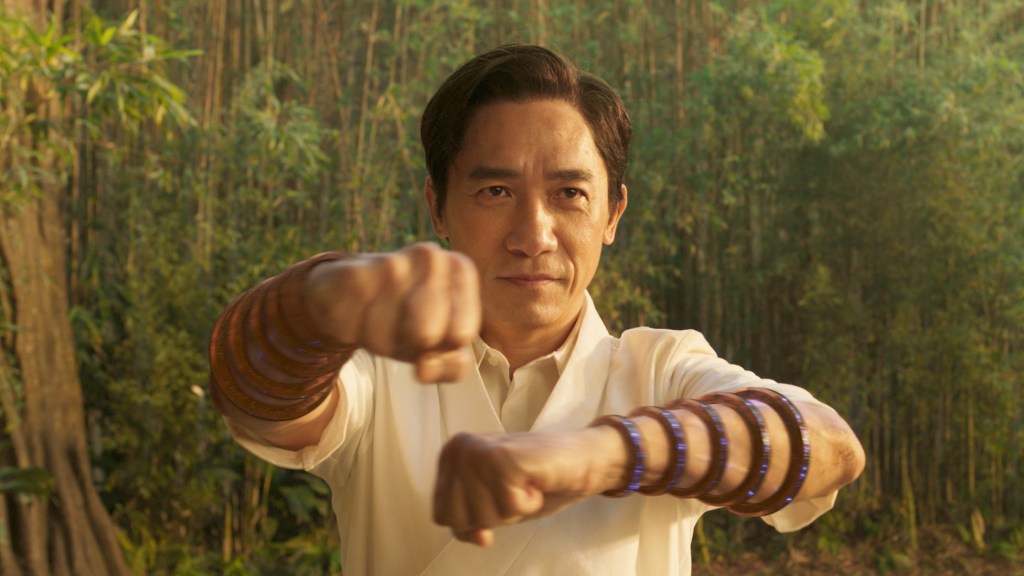
It stars an excellent Tony Leung as Xu Wenwu, a ruthless crime overlord briefly saved by love until that love is lost, wanting nothing more than to reunite with his wife and bring his family back together. The titular son is also in this movie, whose story presumably reflects how traditional Chinese view their expatriates: he escapes his family responsibilities by running to America, spending a decade doing menial tasks like valet parking and karaoke, only to be dragged back into the fold by Dad once the lost decade has passed and his lack of agency is assured.

Personal disappointments aside, this is not a bad movie. After the painfully expository first 15 minutes the action starts in earnest, and once you accept that there is no more characterization to be had you can just relax your brain and enjoy the ride: it’s a fun one, with some excellent fight sequences and choreography; some of the best in the MCU.

Where the problems arise is when this movie is used as an example of representation; after all the cheers for being the first Asian superhero movie and all the pride of finally having an international blockbuster starring Asian Americans, there is a relief and long exhale of perhaps having finally made it.  We haven’t. There is more to representation than putting people of colour into films of wide appeal; representation is about the stories we choose to tell about the minorities we don’t often see in media: it’s about choosing stories they can see themselves reflected in, and where they can find validation.  It’s about choosing stories that show us what’s possible beyond the stereotypes, beyond the boxes that have been placed around them. To show us worlds they didn’t know they were allowed to dream.  

While not meeting this admittedly grand ambition, Shang-Chi could have still been a step in this direction while still fulfilling the obligations of the MCU. But by telling a story through a China-centric lens with Asian American characters, there is instead a reinforcement of the other box that we Asian Americans are often trapped in: that China is our patriarch, and that we, without agency, hidden in its long shadow, don’t have a story of our own outside of its point of view.  To move from a lifetime of being invisible extras and bit players in American stories to being the lesser-than in a China-centric story is not progress: we have hustled sideways from one box into another.  The original Shang-Chi of the 1970s comics was a racist portrayal of an Asian man, coloured an unnatural yellow without shoes or shirt, spouting fortune-cookie platitudes in stilted English.  Today he is a man who is defined only by his father’s past, an unopinionated blank slate motivated only by circumstance, who does kung fu and rides a fucking dragon. How far have we really come?

Public Speaking is for Introverts

Hard, but worth it.

The online tests tell me that I live on the line where introversion and extroversion meet, though my childhood tells me I grew up well within introversion country.  Only over many years did I slowly walk my way over to the border.  Speaking up, let alone in public, did not come naturally.

I recall these childhood moments clearly, as the accompanying stress was enough to sear them into my memory forever.  The first time speaking to a stranger was ordering hamburger toppings at the local Harvey’s: my mother pushed me to do it, forcing me out from hiding behind her.  The world seemingly froze as I enumerated sauces and vegetables before quickly retreating to safety back behind her legs.

Years later, I faced a microphone for the first time in what was to be a terrifying and profound failure.  Having run for elementary school class treasurer for reasons I can no longer recall, I knew that a speech was part of the political process but was not prepared for what it would actually be like.  

All focus was on the small silver microphone pointed accusingly at my face; every sound I made indiscriminately and ruthlessly amplified. My peers sat cross legged and impatient on the gymnasium floor, glaring up at me on the uncomfortably elevated stage. For someone who could barely speak up in class, this was terrifying. Reading off my speech from a shaky stack of cue cards, I still remember the confused and angry faces the few times I looked up into the audience. I finished to a disapproving silence, the sound of my own lack of confidence still reverberating loudly around the room. Needless to say I did not get the vote.

These memories resurfaced decades later, working my first real job after university: enthusiastic for my new corporate life at a large multinational technology company, I had joined a networking group.  We were planning a social event dinner and needed an MC to run the evening for the 30-50 guests.  As we basked in the tense silence that follows requests for volunteers, my old memories flashed back quickly before me, with all its amplified insecurities and resulting traumatic silence.  Experts believe that negative public speaking experiences in childhood can leave children with a lifelong fear of the podium.  I can see that.  Still, I found myself compelled to raise my hand; something inside made me do it.  Apparently it was time.

The event soon came, and something clicked. It seems some personal growth had occurred inadvertently in the decades following elementary school: years spent trying to be funny in class seems to have sharpened my reactive wit, and my post-pubescent voice, now too low to be heard in bars and restaurants, happened to work well on a microphone. The cheers and applause surprised me; I took an awkward bow, not knowing what else I was supposed to do. When the committee planned for future events I never had to raise my hand again. There was a job that was now mine by default.

Once my unmarried friends found out I had some event hosting experience, I inevitably became the de-facto wedding MC, and the events got larger and larger.  Venue coordinators ask if I was a professional after watching me work, though I presume they say that politely to everybody.  Friends have said that my interesting and engaging onstage presence is completely different than the me in real life, and they meant that as an honest compliment.  Strangers in the audience have approached me with awkward praise before scurrying off to the dessert table. The DJ at a large Indian wedding I hosted told me he’d never seen this particular audience actually pay attention like this.  It seems I can make a 300-strong crowd of Indian uncles and aunties listen to speeches and not immediately stampede the buffet, though I can barely hold focus telling stories at a small dinner party.

Through it all I still identify as an introvert, and looking back I found that it’s the naturally introverted traits which were actually the most useful when talking in front of an audience.  To speak publicly is to be deeply focused on a task without distraction; the overall experience is less like speaking to other people than it is like speaking to yourself; you just happen to be doing so in front of those other people.

As such, the relationship between a speaker and a large audience is unlike most other human relationships.  Something strange happens once a group size reaches a critical mass: the individuals in the audience stop being people altogether, and meld together into a new and separate entity.  You can feel its essence permeate the air, in the chatter and indistinct murmurs between the clinking of the tableware.  It is the feel of the room, the manifestation of its vibe, amorphous and ethereal; the psychic slurry of everybody’s individual feelings.  All the people are essentially gone, shadows behind the blinding spotlight; there is only the communal spirit of the audience, a wilderness creature that you have to make your friend.  And how do introverts make friends?  By listening and feeling things out, and by being calm and not trying to dominate; these tactics that work well on animals also apply for taming large groups of people, given that they’re much the same thing.

All of these potentially wonderful experiences lie locked behind the fear of speaking itself.  It takes some time to hear the sound of your own amplified voice without panic, let alone do the actual talking.  Starting is the hardest part: the lead up to the first word into the mic is nothing but stomach knots and escalating tension, like a climbing roller coaster that’s getting ready to drop.  Once the ride starts you acclimate quickly, but the lead-up has always been some kind of terrifying.  Even now, after all this practice, the fear in the moments before speaking have been a constant throughout life: from bombing elementary school speeches to emceeing large events to raising my hand in class or running meetings at work, speaking up has always been preceded by anxiety and a touch of dread.  With enough practice though, you figure it out.  Introversion and extroversion are like muscles: if you’re born favouring one side you can still find ways to strengthen the other.  Though the same fears have always been there, constant and reliable from the beginning, the weight of that anxiety has remained the same while carrying it around has gotten easier with exercise.

And now, here we are.  I’m an introvert that loves public speaking.  Interests include writing alone, thinking alone, sitting alone in a boat on a lake, and speaking alone in front of hundreds of people.  Even though failure is a distinct and painful outcome with its boos and awkward coughing, never forget that success can also be possible, and that it can be wonderful.   It’s a chance to touch many people’s lives all at once and feel their reaction in real time.  For introverts, success can be even more meaningful; there is something special about talking effectively to an audience for people who don’t talk often.  For the quiet ones in the back who all secretly have something worth showing and for the wallflowers that really just want to be seen, a lifetime of the deep and unshared can finally have an outlet: a room full of people, open to be influenced and who’s recognition is there to be earned. 

But for me, for every time I do a microphone check and step up behind the podium, for every time the roller coaster starts and the anxiety comes to a head, I’m telling my past self in grade school after his disastrous speech that everything will be okay, that he did the right thing, and that even though it may be hard now it all worked out in the end.  And whenever an evening ends with smiles, laughter and applause, that little boy is vindicated, each and every time.

New Normals

How the coronavirus is like that time I cut myself.  Because everything is the coronavirus.

Just before the pandemic, I cut my thumb.  While it’s ok to take some pride at the speed with which you can dice garlic, it’s also important to keep focus and look in the direction of the knife.  

My wife and I disagreed about the severity of the injury.  To me, a chunk of flesh and nail was now mostly separated from the rest of my body, hanging on if not by a thread then by an appropriately unsafe amount: the threat of a painful and violent separation was real.  I yelled in pain and shock and cursed my own stupidity as we rinsed the appendage under the sink; the surprising amount of blood made me queasy and light headed.  Lying on the floor with my thumb up in the air made it all feel better, like the dying cyborg Arnold at the end of Terminator 2, melting dramatically into a sea of hot pain.

My wife thought I was being a baby.  “This is just a scratch” she said, as she’d experienced much worse.  Doubtful.  She calmly applied a mysterious Chinese powder which we keep right next to the American band-aids, and wrapped my thumb in a few layers of gauze.  Lying in bed, convinced a hospital visit was unnecessary, the steady rhythm of dull pain throbbed me to sleep.

Every day thereafter the thumb was wrapped in layers of clean, fresh gauze, both to keep the wound safe from the world, and to keep the world safe from having to look at it.  Wearing layers of protection that had to stay clean meant that nothing could touch it, and that in turn meant I effectively did not have a left thumb.

Your thumb is a critical digit.  Without it, your index and middle fingers need to step up and work together in a forced and unholy partnership.  Buttoning up a dress shirt in the morning is like buttoning up your shirt using a pair of chopsticks.  Taking your phone out of your pocket is a test of strength and dexterity, while typing on your phone with the inner left side of your index finger puts that new dexterity to immediate use.  Holding things became precarious: a cup of water could just fall out of your hand at the slightest provocation.  Commuting to work, my compromised grip on the subway pole meant that the risk of falling over was real.  And finally, showering at the end of a long thumbless day, I washed my hair with my right hand while my left thumb, wrapped in both gauze and plastic, extended as far from the showerhead as possible: I had discovered a terrible dance move, and was holding it for all to see. The feelings of vulnerability and embarrassment do not easily wash off.

This mildly traumatic experience can be made to seem somewhat like the coronavirus pandemic, though it’s admittedly a huge stretch.  The knife hitting the thumb could be the virus arriving on North American shores.  The ensuing panic, trauma and confusion is like the bleeding that immediately followed, with everybody scrambling to find ways to manage, successfully or not.  And that awkward period without the use of a thumb is our current reality without the use of physical closeness, our mask-covered faces as the gauze-covered digit.  Anything could be the coronavirus these days.

What’s interesting about the comparison is what happens next.  Slowly, after a month or so, my thumb gradually healed.  The chunk of nail that had been cut through had grown out, and the thick layer of dead skin underneath came off with it, revealing the fresh, virgin thumb underneath.  My biggest fear was nerve damage, and as I now have a small dead spot in the corner of my thumb it sadly seems like this was the case. Very little time was spent dwelling on the loss however, both because it really wasn’t that bad but also for reasons that are a bit more revelatory.

The joy in getting back the use of my thumb overshadowed the fact that it’s not what it used to be.  I had long since adjusted to doing things the hard way: dressing slowly, texting poorly, dropping objects and falling down on the subway.  Being able to do things normally again felt like I had gained superpowers of speed and efficiency.  With my newly opposable thumb I have reclaimed my homo sapien status, standing proudly next to my human brothers and sisters.  So what if part of it is a little numb?  I can button shirts and hold cups again.  

Similarly, though the coronavirus pandemic may not end soon, it will also not last forever.  One day, when the virus has been effectively managed, the world will pick up the pieces and return to some semblance of normalcy.  Some parts of the life we once knew and loved will never come back, and we will miss them dearly and mourn their loss.  But it’s important not to discount the joy of all the good things that will survive and rush back into our lives all at once: Running into friends unexpectedly at a crowded bar or restaurant, shouting greetings over the noise and bustle, seeing their smiles on uncovered faces and hugging them hello without guilt or fear.  Children making new friends in a park, where the watchful eyes of nearby parents provide the only safety they need.  Boarding a crowded flight being only worried about the few hours of discomfort before arriving at your destination.  And returning to the office to see your coworkers face-to-face, riding a crowded subway while tightly gripping the handle.